Potassium vs magnesium deficiency in soybean leaves
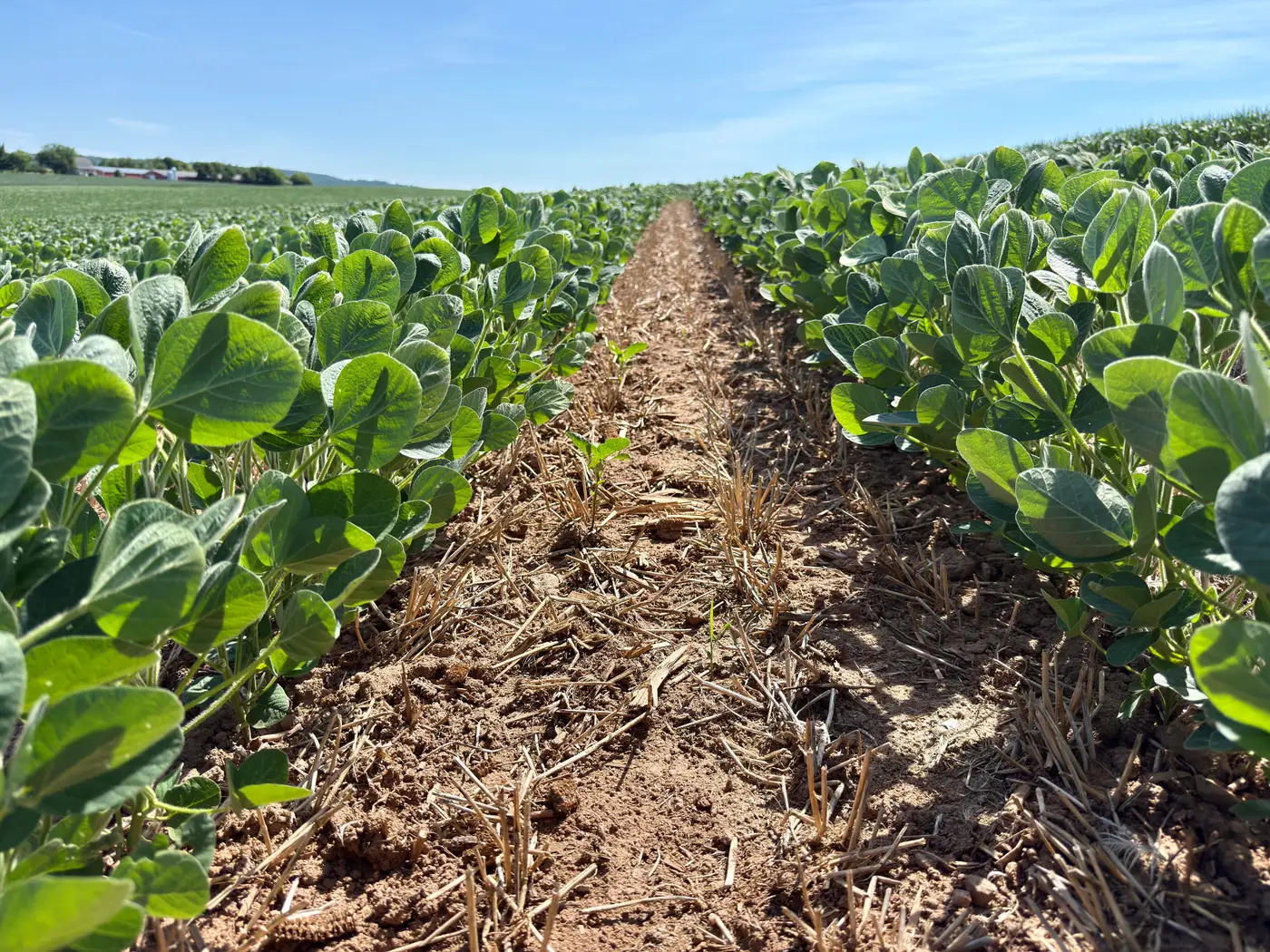
Two trifoliates on the same scouting stop can throw off a potassium call versus a magnesium call if you're going on color alone. Both deficiencies show up as interveinal chlorosis on the lower canopy, both get worse on older leaves first, and from fifteen feet in the cab they look like the same pale leaf. The difference is in where the yellow sits on the leaflet, and it's worth stopping the truck for.
Where the yellow shows up on the leaflet
Potassium deficiency starts at the leaf margin. You'll see a yellow border, sometimes almost a scorch line, running around the outer edge of the leaflet while the tissue closer to the midrib stays green longer. As it progresses the margin tissue can go brown and papery, and the leaflet edges may cup downward. It reads less like "yellow leaf" and more like "yellow rim."
Magnesium deficiency is true interveinal chlorosis. The yellowing fills in between the veins across the whole leaflet, not just at the edge, while the veins themselves stay a distinct dark green. On a bad case it can look almost like a Christmas tree pattern, green veins running through pale-yellow tissue. There's no margin-first pattern the way there is with potassium.
Both deficiencies hit the lower, older trifoliates first because potassium and magnesium are mobile nutrients, pulled from old leaves to feed new growth. If the chlorosis is showing up on the newest leaves at the top of the canopy, that's a different call: sulfur or iron, not potassium or magnesium.
Soil conditions that point one way or the other
Field history narrows it down before you even pull a leaf. Potassium deficiency tends to show up on compacted ground, in wheel tracks, on drought-stressed fields where roots can't chase K through dry topsoil, and on soils cropped hard without K replacement for a few years running. It also shows up unevenly across a field, worse on the knolls and the thin spots than the bottoms.
Magnesium deficiency tracks differently. It's more common on sandy, low-CEC soils where Mg just doesn't hold, and on fields that have had heavy potash applications without any dolomitic lime or Epsom-salt foliar to balance it. Potassium and magnesium compete for the same uptake sites, so a field pushed hard on K can start showing Mg symptoms even when the soil test Mg number isn't dramatically low. If you know a client runs potash annually and skips lime, put magnesium on the shortlist before you walk the field.
Neither soil history nor leaf color replaces a tissue test. Pull the most recently mature trifoliate, bag it, and get it to the lab if the symptom is spreading or the yield hit looks real. Visual ID gets you to a shortlist, not a diagnosis.
Telling K from Mg once you're standing in the row is usually the easy part. The harder call is knowing which of forty client fields deserves that stop this week, and which ones are just carrying normal late-season lower-leaf yellowing that doesn't need a tissue test at all. A weekly red-edge and NIR pass that flags which fields are running a nutrient-pattern stress signature versus a water or salinity signature cuts that list down before you load the truck, which is the premise behind Crop Stress Map.
See which fields are actually asking for a visit this week.