Zinc vs iron deficiency: reading the difference in the field
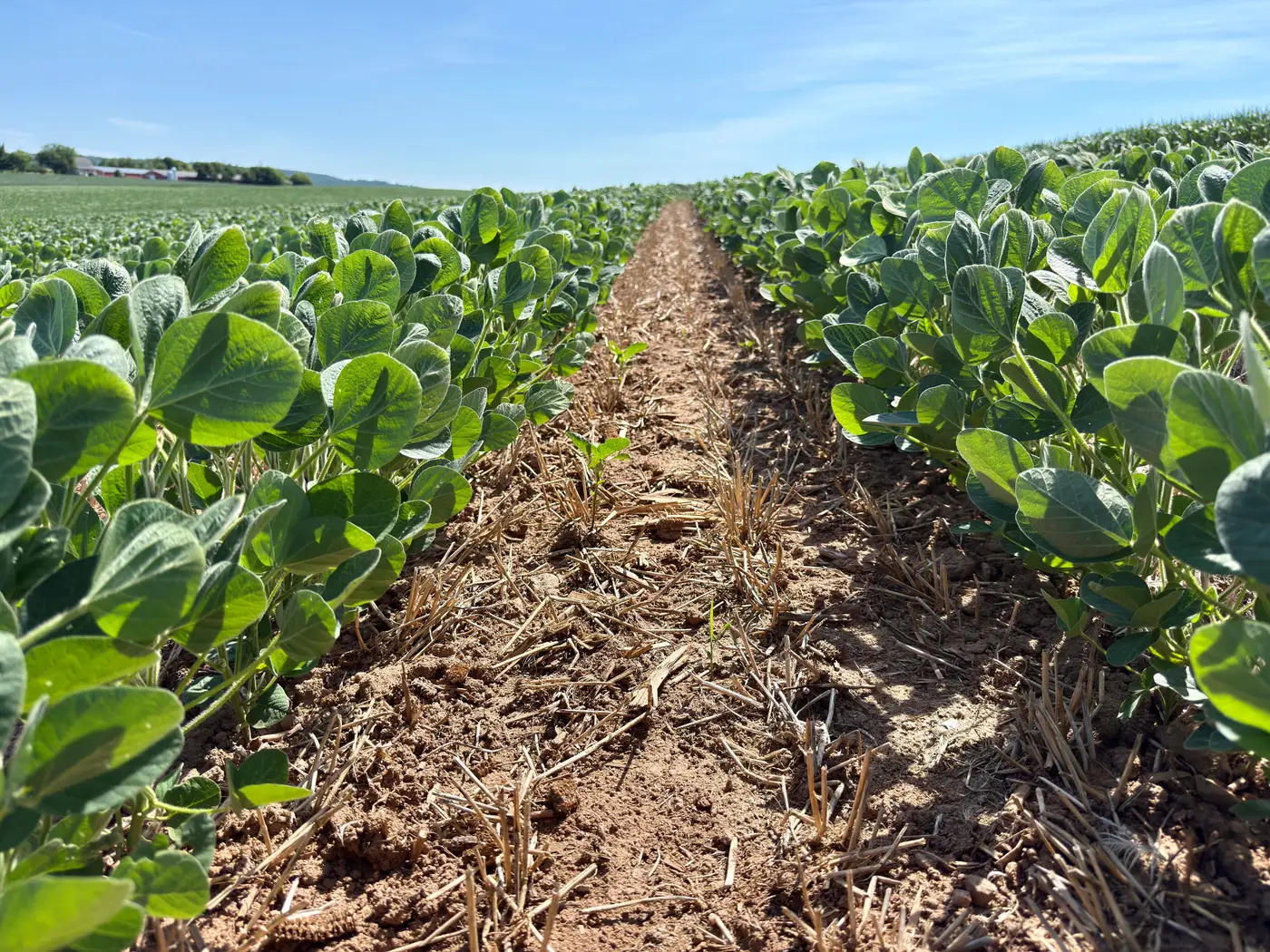
Both show up as pale, streaky leaves and both get blamed on "the map," but zinc and iron deficiency come from different soil conditions and they don't sit on the plant the same way. If you're trying to call it from a stress layer before you walk the field, here's what actually separates them.
Where the symptom shows up first
Iron deficiency chlorosis (IDC) is a newest-growth problem. It hits the top of the canopy first, and in soybeans especially, you'll see it concentrated on knolls, eroded side-hills, and anywhere the subsoil carbonate is close to the surface. The youngest trifoliates come up pale lemon to almost white between dark green veins, and in a bad spot the leaf margins can scorch and die back while the plant stalls out entirely. It's a pH story more than anything. High-lime, high-salt spots tie up iron in the soil even when there's plenty of it, so the plant can't pull it regardless of what the soil test says is "available."
Zinc deficiency reads differently. In corn it usually shows as a wide bleached band running parallel to the midrib on leaves in the mid-canopy, not just the top, while the leaf base and the midrib itself often stay green. Internodes shorten, leaves come in narrower, and in a severe case you get the classic "white bud" look on young corn where the whorl itself is pale. Zinc problems correlate more with cold, wet soil early in the season, high soil phosphorus, sandy knolls, or cut areas from land leveling, and they tend to show up field-wide rather than hugging the exact contour of a calcareous ridge the way IDC does.
Interveinal chlorosis, two different patterns
Both are "interveinal chlorosis" on a scouting report, which is why the two get mixed up on paper. The tell is pattern and position, not just color. IDC is uniform yellowing between veins on the newest leaves only, often sharply bordered by soil type, and it can flip to green later in the season if the plant roots down past the high-pH layer. Zinc shows more as striping or banding, shows on leaves that aren't the newest flush, and doesn't clear up on its own the way a mild IDC spot sometimes does once roots get established.
On red-edge or NIR imagery, neither of these announces itself as "zinc" or "iron." What the imagery gives you is a vigor hit, reduced chlorophyll signal in a specific zone, sometimes banded, sometimes following a soil boundary you can see echoed in an SSURGO layer or an old yield map. That's the flag that tells you a spot is worth the walk. The actual call between zinc and iron still comes from standing in the row, checking leaf position and pattern against the soil map, and backing it with a tissue or soil test before you write a recommendation.
Confirming it on the ground
A quick field check that holds up:
- Note which leaves are affected: newest flush only points to iron, mid-canopy or whole-plant points to zinc.
- Check the soil map for the spot: calcareous knoll or high-pH zone backs iron, sandy cut or cold wet low spot backs zinc.
- Pull a tissue sample from the affected and an unaffected area side by side rather than relying on one sample alone.
- Watch the pattern over two to three weeks: IDC that's going to self-correct usually starts greening from the base of the leaf outward.
None of that changes with better imagery, and it shouldn't. What a weekly red-edge read does is shorten the list of spots that need that walk in the first place, instead of you guessing which of twelve client fields is worth the drive this week. Crop Stress Map flags the vigor-loss zones and tags them by likely cause category so you know which fields to prioritize before you ever open a truck door.
Next time a client calls about pale corn or bleached soybean leaves, pull the stress layer first and let it tell you which quarter to drive to.